Introduction
Clean power got a major boost this quarter. The next renewables capacity auction (AR7) opened, with over £1 billion for new offshore wind projects. It offers longer contracts for some technologies, and higher maximum strike prices (up 11%) in the hope of attracting more capacity. Renewables and nuclear supplied two-thirds of Britain’s electricity in September, and clear skies throughout summer helped solar set new output records, briefly meeting over 40% of national demand. A sunny Saturday in August saw demand met by the transmission system sink to a modern-era low, as rooftop solar PV meant more power than ever was generated locally.
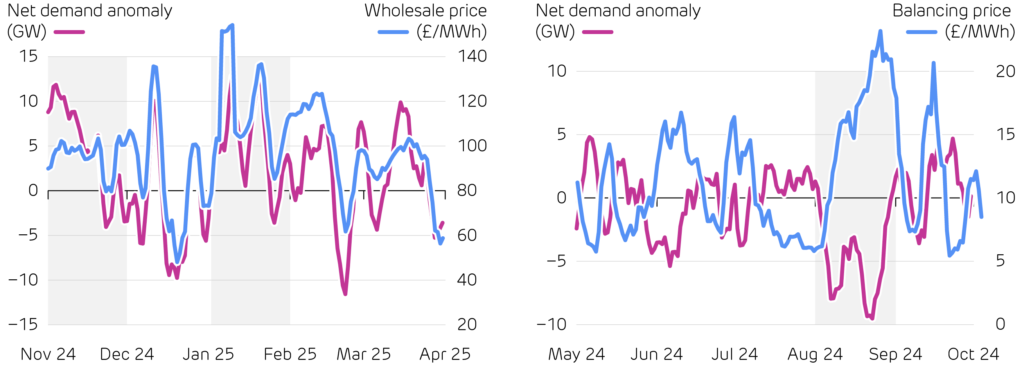
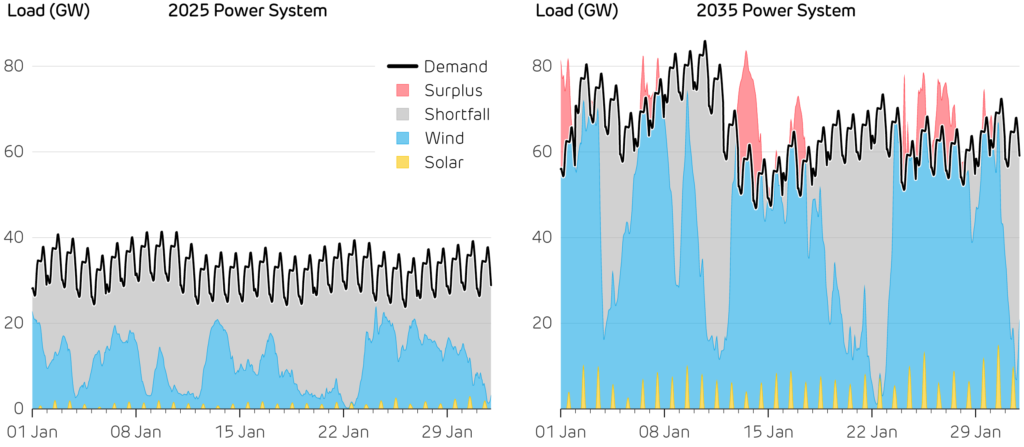
The weather now very much calls the shots, dictating power prices, system balancing and infrastructure stress. Our second article digs into the Royal Meteorological Society’s new State of the Climate for the UK Energy Sector report, charting how “dunkelflaute” and stormdriven surpluses affect power prices and security, and what this means for planning over the next decade.
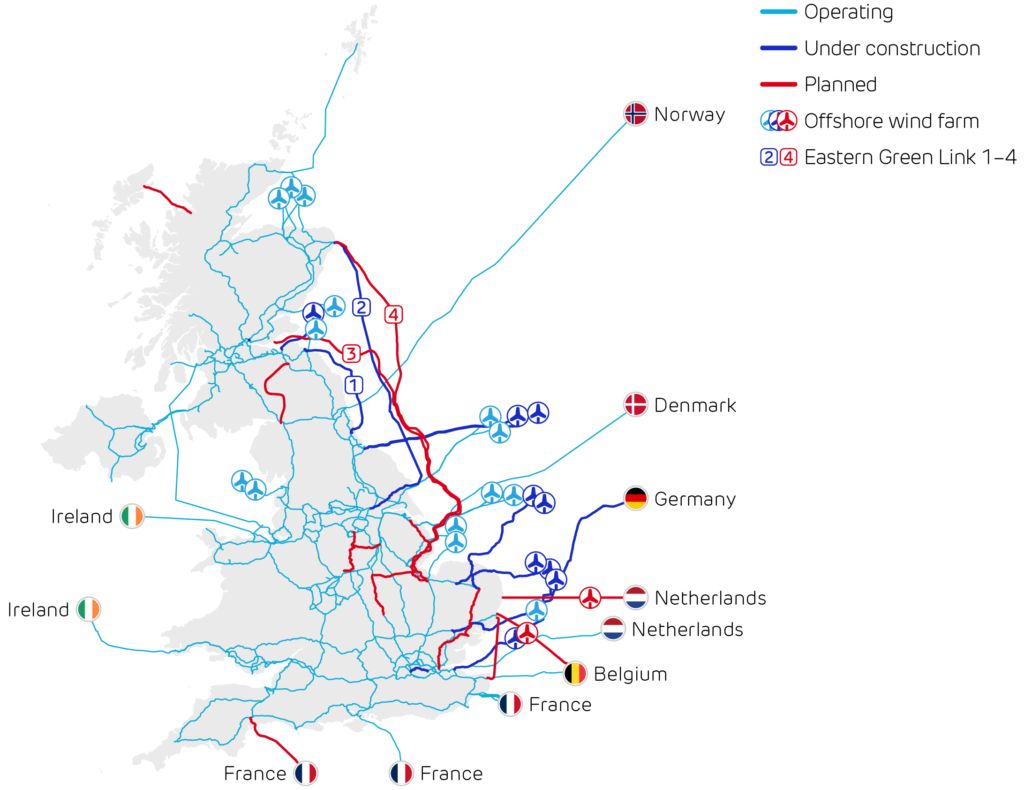
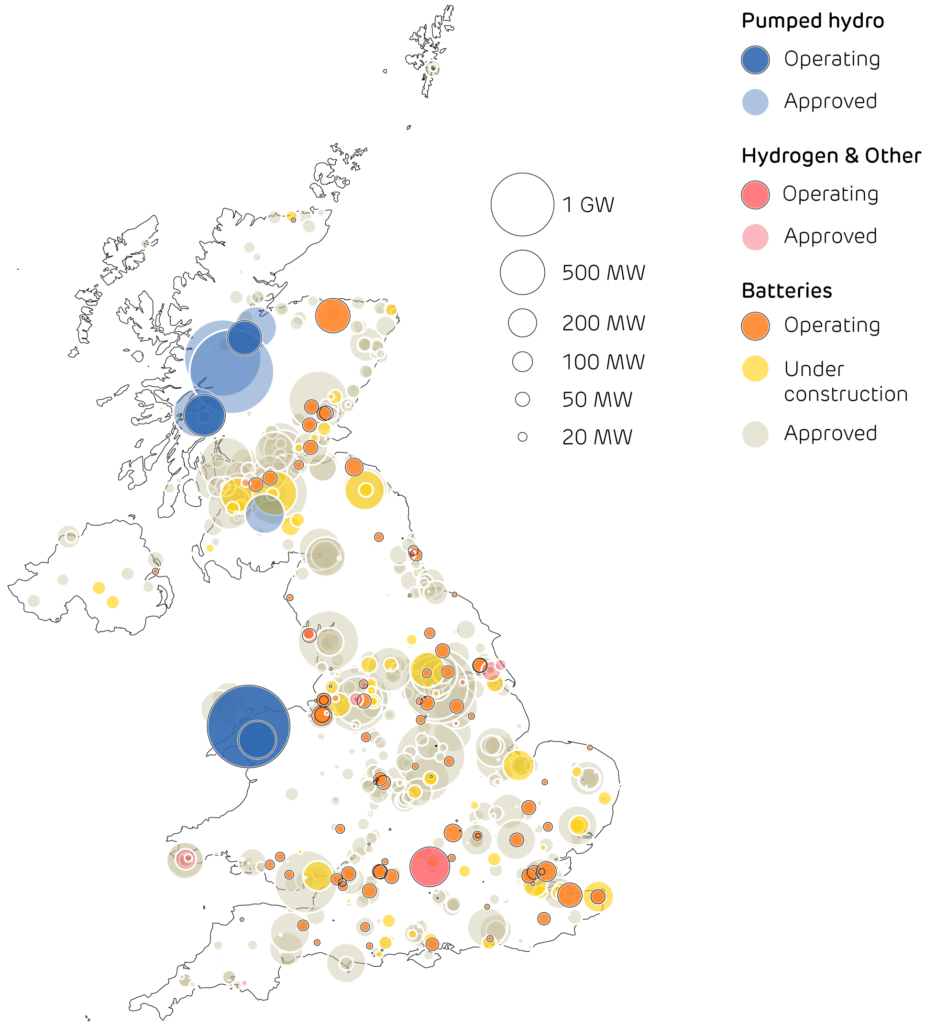
Building the infrastructure to utilise clean power is the other side of the story. National Grid’s Great Grid Upgrade is the biggest overhaul to the transmission network since the 1960s. We look at its 17 major projects, from the Eastern Green Links to ‘Offshore Hybrid Assets’ that aim to cut curtailment and move Scottish wind power to southern demand centres. Flexibility is also booming: Britain’s battery storage capacity surged past 6 GW, with hundreds of projects under construction or given the go-ahead. We map the UK’s energy storage pipeline, identifying Scotland’s Central Belt and England’s industrial heartland as hotspots, and discuss the move towards larger and longer-duration storage, such as pumped hydro, thermal and hydrogen.
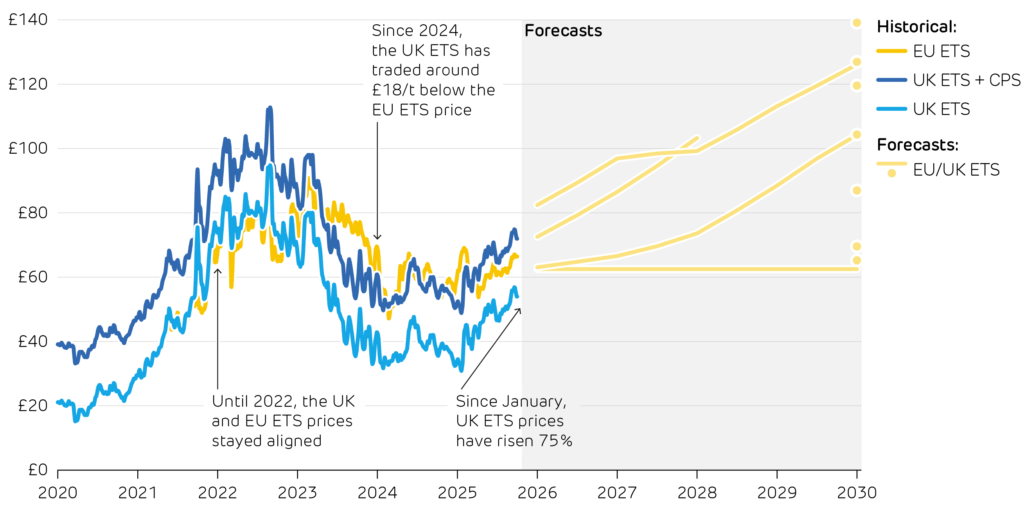
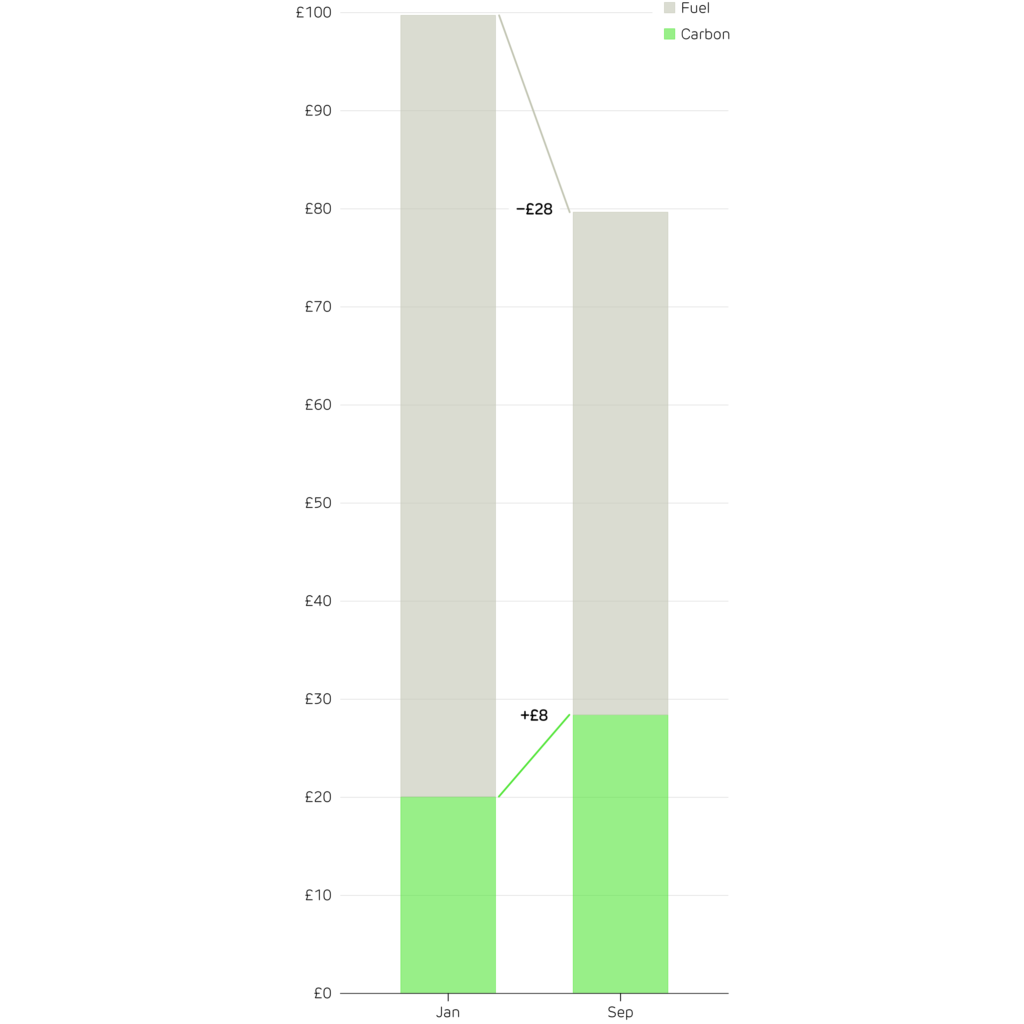
Carbon prices have risen 75% so far this year, after the UK and EU agreed to re-link their emissions trading systems. Our fifth article analyses this shift and its effect on industry, imports and bills. Falling gas prices have muted its impact on electricity generation costs. Ofgem cut the energy price cap for the first time in a year, but the 7% fall in July has been short-lived, as the cap edged back up by 2% in October.
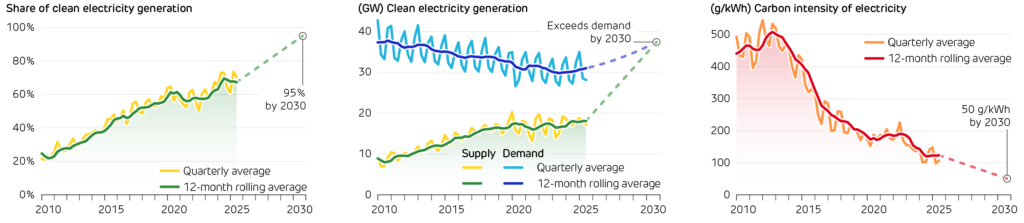
The Government has set three Clean Power 2030 targets, covering the amount of clean electricity produced and overall carbon intensity. Progress towards these has been solid over the past 15 years, but has faltered in the most recent quarter, with the share of clean power falling and carbon emissions rising slightly.