Where is Britain’s electricity system heading
Britain’s energy system is being pulled in every direction at once: we have record levels of renewable generation but bills remain stubbornly high, security is back at the top of the agenda, and we have struggled through record temperatures. This edition of Electric Insights features a Q&A with Will Gardiner, CEO of Drax, about what Britain’s latest electricity trends tell us about where the system is heading – and what it will take to make net zero power more affordable and reliable. This article explores the main themes discussed in the accompanying Q&A video.
From clean generation to a clean system
Britain has made real progress in decarbonising its power system. There is now a real opportunity to turn some of the country’s energy challenges into solutions that strengthen energy security, support growth and deliver wider benefits. Homegrown renewable electricity is doing much of the heavy lifting, reducing reliance on imported fuels and improving energy security, while also helping lower emissions and bills.
But the next stage goes beyond building more generation. It is about creating a flexible, resilient and affordable system. This means looking beyond single technologies, to the whole-system challenge where renewable generation, dispatchable low- carbon power, storage and flexibility all work together.
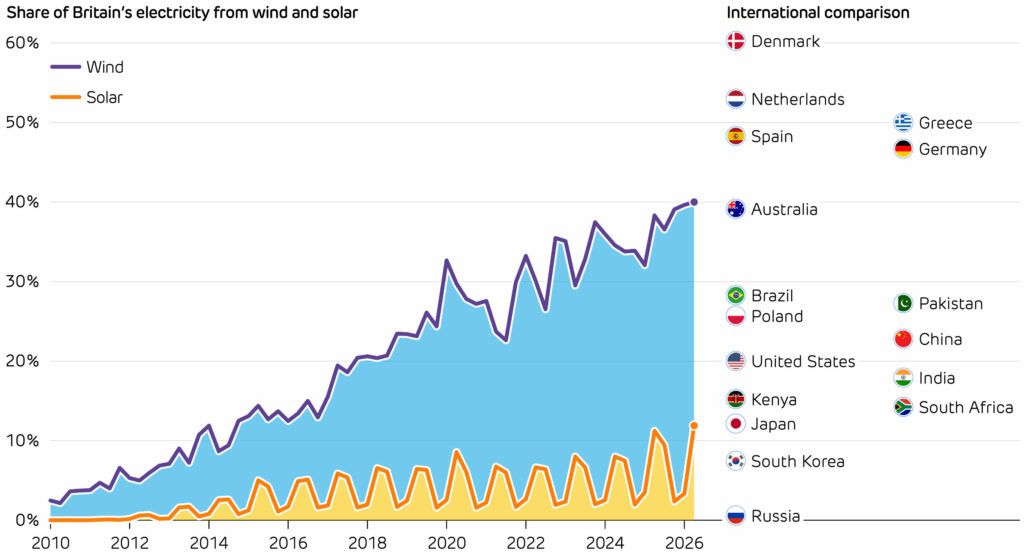
The Electric Insights data suggest that Britain is heading in the right direction. Wind and solar now produce 40% of our electricity, cutting the need for imported gas. But the data also show the practical challenges this is causing: renewables are being curtailed, there are more hours with negative power prices, and growing strain on system balancing. The overall direction is encouraging, but we are paying the price for falling behind on flexibility.
The share of Britain’s electricity demand met by wind and solar power reached 40% in the second quarter of 2026, ahead of most major world economies. International comparisons cover 2025, or the most recently available data.
Making the economics work
Britain has some of the highest electricity prices in the world, and geopolitical shocks are pushing prices up further, making bills the biggest issue for most people. Rising offshore wind prices, expensive grid reinforcement and curtailment costs have raised questions about whether the economics of the transition still stack up.
There are no easy solutions here, and the key question is which investments will reduce costs and risk over time. Relying on volatile fossil fuel markets is expensive, as consumers have felt directly. Renewables reduce that exposure but incur different costs, so a balanced approach is needed which invests in the grid, storage, demand response and dispatchable low-carbon generation.
Together, these improve flexibility which helps balance the system as supply and demand change, making renewable power dependable. Policy certainty and investable market frameworks matter more than ever, because they give companies the confidence to deliver the infrastructure Britain needs to fix affordability and security of supply.
A huge, coordinated effort is needed to meet our infrastructure needs. The UK Government’s Clean Power 2030 targets imply adding roughly 60 to 70 GW of solar and wind this decade, more than doubling current capacity. The technologies are already mature – delivering at the necessary pace is now the hard part.
The barriers are familiar: planning, timely grid connections, supply chains and investor confidence. Overcoming them is not impossible, but this needs clearer policy, faster decisions, and a relentless focus on practical cost-effective delivery. The transition will only succeed if ambition can be turned into projects on the ground quickly, responsibly and affordably.
Demand is becoming part of the challenge
Electricity supply has commanded most attention, but demand is a growing part of the story. Electrifying heat, transport and industry means demand could rise rapidly. Electricity has to become the obvious economic choice, not just the low-carbon choice.
That means addressing the balance of policy costs on electricity versus gas, supporting consumers, and preparing the system for growth. It also means being smart about new demand from AI and data centres, making sure they connect where clean firm power and grid capacity are available. As demand grows, there is a strong case for generating more electricity closer to where it is needed, reducing pressure on the network and improving system resilience.
Gardiner argues that for Drax, that reinforces the importance of firm, flexible generation and long-duration storage, assets such as sustainable biomass and pumped storage. A renewable power system still has to be there when people and businesses need it.
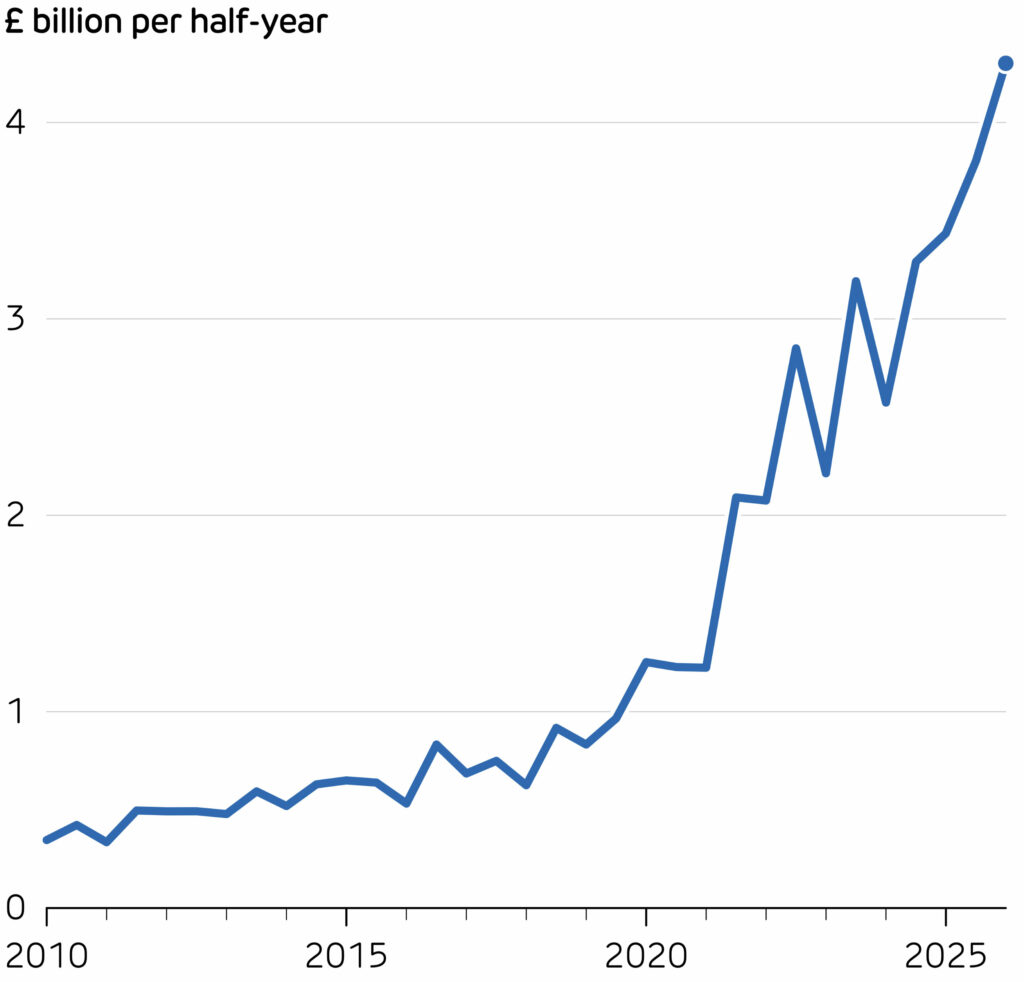
The cost of balancing Britain’s electricity system surpassed £4 billion in the first six months of 2026 – around £25 a month from every single household. This pays for adjusting generation and demand to match exactly, including curtailing wind farms when needed.
Preparing for when the weather does not cooperate
We all know that the wind doesn’t always blow, and the sun doesn’t always shine, batteries are excellent for covering short peaks. But Britain is a windy country, so there will be shortfalls lasting for days or weeks at a time when it’s cold and still. To cope with our weather, we need to get serious about long-duration storage and clean dispatchable generation so that supply remains secure in all situations.
This challenge is becoming more important as Britain’s climate changes before our eyes. This summer’s heatwaves and droughts are a warning that climate resilience must become central to planning. Hotter summers, winter storms and changing rainfall all affect demand, generation and infrastructure. We can no longer design for the weather we remember from childhood. The power system needs to cope with the more extreme conditions and wider swings that the future will throw at us.
The challenge therefore has two sides. A power system increasingly dependent on weather-driven generation needs flexibility to manage natural variations in wind and sunshine, while the infrastructure itself must become resilient to the more extreme climate.
Turning clean power into an industrial advantage
Britain has the chance to turn a challenging energy transition into an industrial advantage. The country has deep expertise in power markets and engineering, plus sites and skills that can be repurposed rather than abandoned.
If the grid and flexible assets can be built at pace alongside renewables, clean power can support new industries from data centres to advanced manufacturing. More importantly, it can protect consumers from the next shock in global gas markets. Gardiner believes that is exactly the kind of joined-up approach the transition now needs: one that attracts investment, keeps the system secure, and gives homes and businesses confidence about what energy will cost.
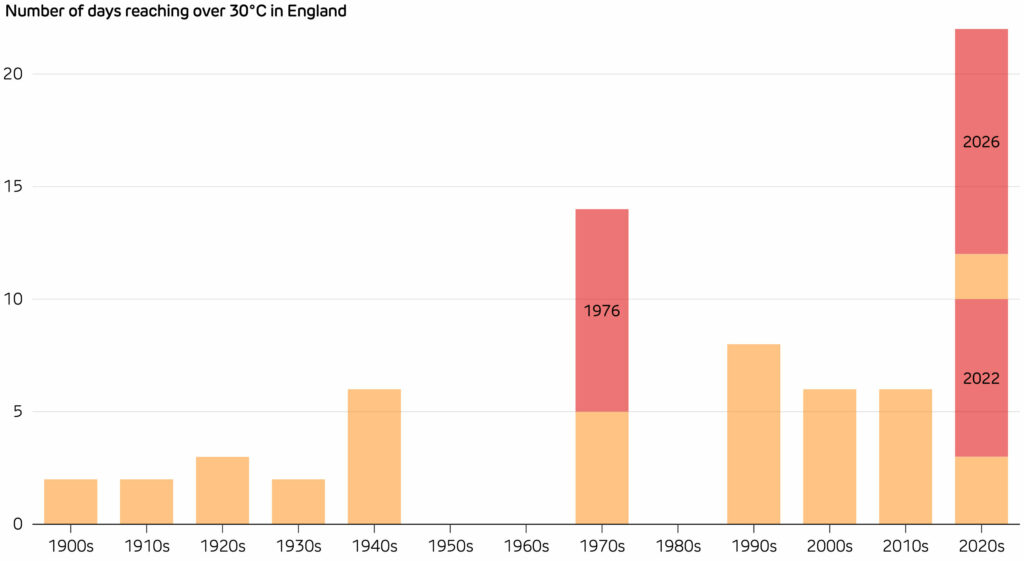
This year alone has already seen more days hit 30°C than in any decade since the 1970s. The three years with most days over 30 are highlighted. Data as of 17 August.